
A No-Jargon Guide to Buying the Right Wheels
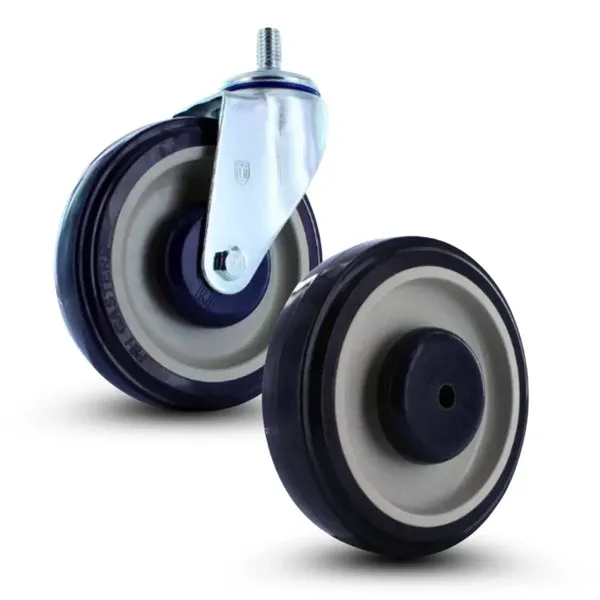
Ever pushed a heavy cart, a hospital bed, or a squeaky office chair across a floor and thought, “there has to be a better wheel for this”? You’re closer to an expert than you think, but you just need the right words for what you’re looking at.
That’s what this guide is for: no assumed knowledge, just what you actually need to know before you buy.
So What Is a Caster, Exactly?
Here’s the one thing to “lock in” first: a caster isn’t just a wheel. It’s the whole assembly; the wheel plus the bracket that attaches it to whatever needs to roll. A wheel on its own is just the round part touching the ground. A caster is the ready-to-install unit: wheel, bearing, and mounting hardware together, built to bolt, screw, or weld onto a cart, a chair, a machine, or anything else you need moving without lifting it.
You’ve seen casters everywhere, even if you never had a name for them: office chairs, hospital beds, restaurant equipment, tool chests, dollies, warehouse shelving, factory machinery. If something heavy needs to move without being carried, there’s a good chance a caster’s doing the work. (You can see the full range of options in Casterland’s catalog if you want to look while you read.)
Swivel or Rigid? That’s Your First Decision
Casters come in two basic styles, and picking the right one comes down to how you need to move.
Swivel casters rotate a full 360-degrees, so you can steer and turn in tight spots. Rigid casters only roll straight, front to back – no turning. Most carts use both: two rigid casters at one end for stability, two swivel casters at the other for steering. That’s the same setup as a shopping cart, so you already know how it feels.
Need to maneuver around corners? Go swivel. Need something that just tracks straight and stays predictable? Rigid’s your answer.
Many swivel casters also come with a swivel lock (holds the wheel facing straight ahead when you need it) and a wheel brake (stops it from turning entirely). Worth adding anywhere safety matters — medical equipment, workbenches, anything on a slope.
Plate Mount or Stem Mount? Check What You Already Have
The mount matters as much as the wheel. A plate mount attaches with a flat metal plate and several screw holes — the standard for carts and larger equipment, since it spreads the load out. A stem mount attaches through a single center post that fits into a socket, common on lighter furniture like office chairs.
Before you buy anything, check what your equipment currently uses. Plate and stem casters aren’t interchangeable without modifying the mount point, and that’s an easy mistake to make.
The Wheel Material Changes Everything
This is where most first-time buyers get stuck, so let’s make it simple. The material affects how much weight the wheel carries, how loud it is, whether it marks your floor, and how it holds up indoors versus out.
- Polyurethane — quiet, floor-friendly, handles moderate to heavy loads. The default choice for offices, retail, and light industrial use.
- Rubber — soft, quiet, good grip. Carries less weight than harder materials and wears faster under heavy industrial use.
- Cast iron — built for serious weight and heat. Hard and loud, and it will damage softer flooring. Warehouse material, not showroom material.
- Nylon — hard, affordable, good for heavy loads in dry spaces. Like cast iron, it’s noisy and rough on finished floors.
- Stainless steel — this one’s about the frame, not the tread. It resists corrosion, which is why you’ll see it in food processing and healthcare, anywhere that gets washed down often.
Quick rule of thumb: softer and quieter wheels protect your floor but carry less weight. Harder wheels carry more weight but bring more noise and more floor wear.
Don’t Skip the Load Capacity Math (The Whole Caster Set Matters)
Every caster has a rated load capacity — the max weight it can safely carry — and that number is per caster, not per set. Outfitting a cart with four casters? The combined rating of all four should comfortably clear the total weight of the cart plus whatever you’re loading onto it, with some room to spare.
Guessing here is the single most avoidable mistake people make. Give yourself the extra five minutes with a calculator before you order. Casterland’s team can also help you work out the right rating if you’re not sure.
A Few More Things That Actually Matter
Bigger wheels roll more smoothly over bumps and uneven flooring, and take less effort to get moving. Better bearings — precision or roller bearings instead of basic plain bearings — mean smoother spinning and longer life under heavy use. And if the caster’s headed outdoors or somewhere wet, look for wheels rated for that specifically. Plenty of materials that work great indoors will crack, flatten, or corrode outside.
Ready to Find Yours?
You now know more about casters than most people who buy them. To recap: think about where it’ll be used, what it needs to carry, whether it needs to steer or roll straight, and what floor it’s rolling on. Those four answers get you to the right material, mount, and size faster than anything else.
If you’d rather skip the guesswork, that’s exactly what Casterland is here for. As a specialist in casters and wheels for everyday and heavy-duty use, Casterland — and its sister brand, Caster Town — can match the right wheel to your job, whether that’s one replacement caster for a chair or a full set for warehouse equipment. Browse the full catalog of swivel, rigid, plate mount, and stem mount casters at casterland.com/collections/casters, or reach out to the team directly and they’ll help you find the right fit.