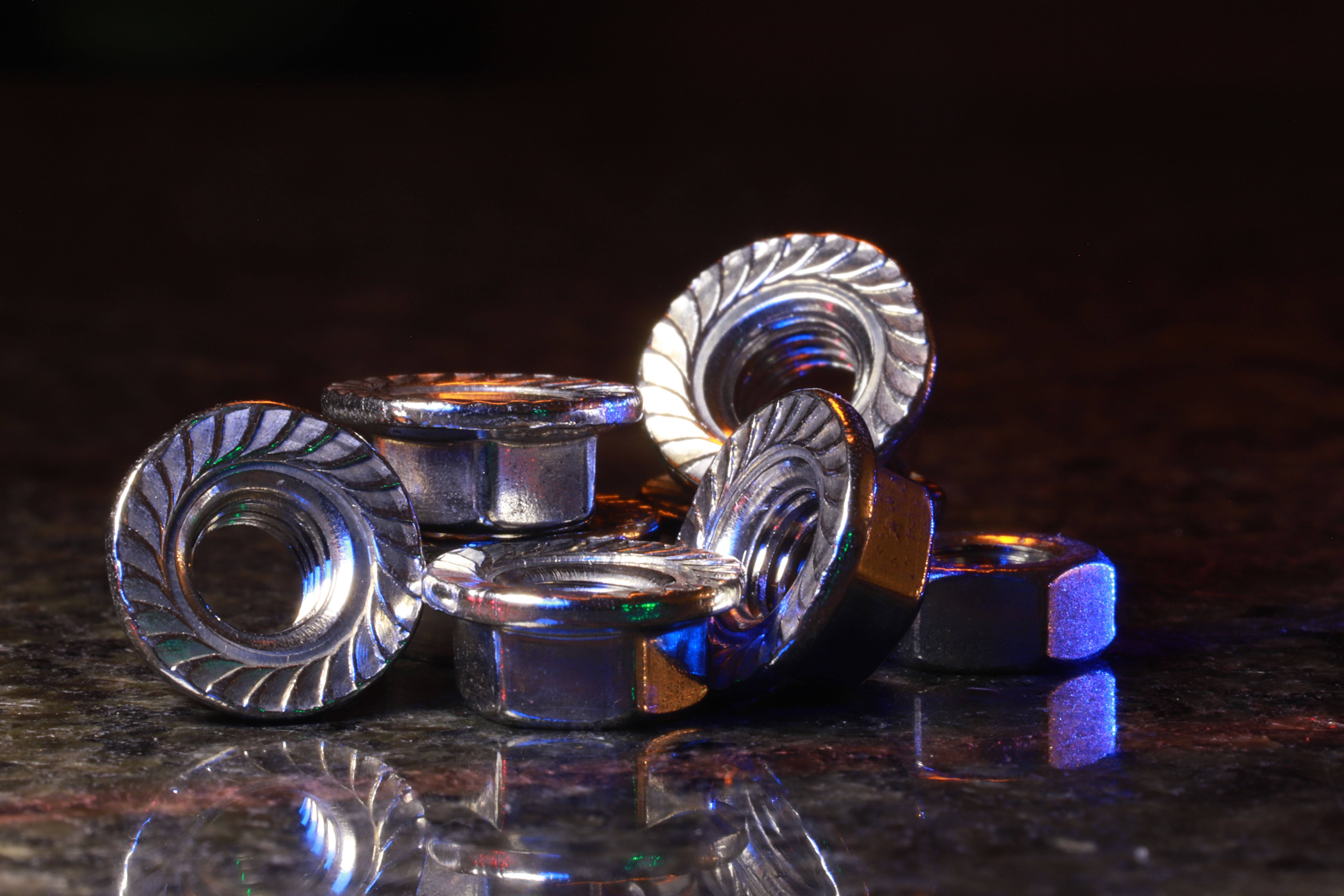
Close-up of a pile of stainless steel serrated flange nuts and a plain hex nut on a reflective dark surface, lit with warm orange and cool blue light

Beyond the Wheel: Caster Accessories That Make a Difference

Brakes, Locks, Bearings, Bumpers, and More

Most people shop for the wheel and stop there. But the small parts around it can decide whether a caster rolls easily, stops where you want it, or lasts in a tough environment.

That’s what this guide is for: a quick look at the accessories and options you might not know exist.

Our Industry Is Not a New One

Because the caster industry has been around for a long time, there are likely more options available than you’d expect. For some styles of casters there are rings that help push cords away from being run over in an operating room environment. There are also position locks for many models of casters. They help you maneuver something in a tight spot, then change to help guide it when you’re moving a distance and need direction control.

Brakes and Locks: Know the Difference

“Brake” gets used for several different things, and they don’t all do the same job:

  • Wheel brake — stops the wheel from rolling. The most common style.
  • Total lock — locks the wheel and the swivel together, so the caster can’t roll or turn. Common in medical equipment, where the equipment has to stay put.
  • Directional (swivel) lock — locks only the swivel, so the wheel still rolls but tracks straight. Handy when a cart needs to be pushed in a line.
  • Floor lock — presses a pad onto the floor, often from one easy-to-reach pedal. It can sometimes be used with certain models of casters, and it’s a true stopper when you need solid stillness.

One safety note: standard caster brakes are designed to hold equipment on flat surfaces. They shouldn’t be relied on to stop a loaded cart on a slope.

Not sure which stopping option fits your equipment? Ask a Casterland specialist and they’ll help you choose.

Bearings: Small Part, Big Difference

For wheels, in addition to choosing the right material, the bearing often makes all the difference in the world. Different quality levels of bearings are often available, and the right one can make something move much easier.

Wheels are your contact with the floor, which also makes them vulnerable to picking up debris. Choosing a sealed bearing can give the wheel a longer life.

Bumpers, Bushings, and Axles

A wide array of corner bumpers, handle bumpers, and strip bumpers can come in handy when circumstances call for them.

Wet or corrosive environments may call for different hardware materials. For those, Casterland carries:

  • Delrin bushings and bearings
  • Stainless bearings, bushings, and axles
  • Vulca seals to help keep the wheels rolling

A Quick Summary

AccessoryWhat it helps with
Cord ringsPushing cords out of the path of the wheel, as in an operating room environment.
Position locksManeuvering in a tight spot, then guiding the caster when you’re moving a distance.
Total and directional locksKeeping a caster from rolling or turning, or keeping it tracking straight.
BearingsEasier rolling. A sealed bearing gives the wheel a longer life.
Floor locksSolid stillness, when you need the equipment to stay put.
BumpersCorner, handle, and strip bumpers for when the circumstances call for them.
Delrin and stainless hardware, Vulca sealsWet or corrosive environments.

Ready to Find Yours?

Don’t try to reinvent the wheel. Let one of Casterland’s specialists share what they’ve seen, heard, and experienced in all their years of helping millions of customers. Casterland and its sister brand, Caster Town, can help you find the accessory that makes your caster work harder for you. Browse caster hardware, bumpers, and bearings at casterland.com/collections/hardware, or reach out to the team directly.
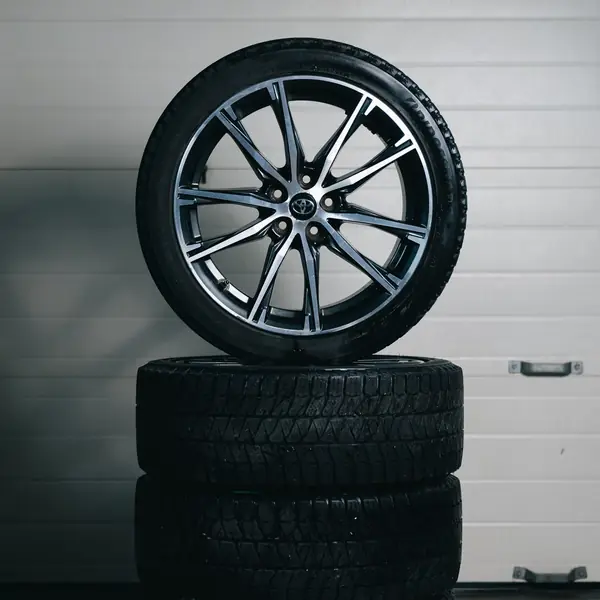
A black alloy wheel with a winter tire standing on top of a stack of three tires in front of a garage door

Air or Flat-Free? How to Choose the Right Tire

How to Keep Your Wheels Rolling, Whatever You’re Moving

Nothing stops a job faster than a flat. Whether it’s a cart, a trailer, a lawn tractor, or an ATV, a tire that goes soft at the wrong moment costs you time.

The Three Types of Tire, Explained

Almost every tire for carts, wheelbarrows, and light equipment falls into one of three groups. Here’s how they compare:

TypeStrengthsTrade-offs
Pneumatic (air-filled)Smooth, cushioned ride over bumps. Lightweight and absorbs shock well.Can go flat from nails, thorns, or gravel. Needs the right air pressure, and can stiffen in cold weather.
Flat-freeNever loses air and needs almost no maintenance. Stable under heavy loads and good in all weather.Heavier than air. Less bounce, so more vibration on rough ground.
Solid rubberVery tough, carries heavy loads, and never needs pumping or patching.Almost no shock absorption, which makes it harder to push on rough ground.

If You Go With Air, Choose Tubes

When you’re selecting air (pneumatic) wheels, choose wheels with tubes. This helps prolong the wheel from going flat. And whichever air wheel you choose, check the pressure now and then. Running it under-inflated wears the tire out faster.

Or Skip the Flats Altogether

There are now flat-free options in almost all sizes and types that will never lose air. They’re designed to mimic the feel of an air tire without the risk of a flat, which makes them a natural fit for jobsites with nails and scrap, rough terrain, or equipment that sits unused between jobs.

Quick rule of thumb: if the ride matters most, go with air. If uptime matters most, go flat-free. If the equipment is used rarely and you want zero upkeep, solid is hard to beat.

Not sure which tire fits your equipment? Ask a Casterland specialist and they’ll help you match it.

Match the Tread to the Terrain

Once you’ve picked the type, the tread pattern is the next thing to get right.

  • Lawn and garden tractors: turf tread is the gentle choice for grass and also wears well on gravel. Agricultural lug tread bites hardest into soft soil, but it does the most damage to a lawn. Industrial tread is a popular middle ground.
  • ATVs and UTVs: mud tires have aggressive, widely spaced lugs that clear themselves. Sand tires use paddle shapes for flotation. All-terrain and trail tires balance everything in between.
  • Carts, wheelbarrows, and dollies: smooth or lightly treaded tires roll easiest on hard ground, while air and flat-free cushion the load on grass, gravel, and dirt.

How to Read a Tire Size

ATV, UTV, and lawn tire sizes are usually written as three numbers, like 25×8-12. By convention, the first is the overall height of the tire, the second is its width, and the last is the rim diameter, all in inches. The rim diameter is the one that has to match your wheel, so check it first. Your equipment’s manual will list the recommended size.

You may also see a ply rating. Higher ply ratings generally give better resistance to punctures and sidewall damage, which matters most on rocky or rough ground.

What Casterland Carries

Casterland sorts its tires into three main types: ATV and UTV tires, agricultural and construction tires, and lawn, garden and golf cart tires. You can also shop by brand, including AMS, Arisun, Carlisle, Cheng Shin, Duro, EFX, GBC, Interco, ITP, Kenda, Maxxis, and STI.

Prefer to shop by size? Tires are sorted by rim diameter, from 4″ up to 16″ (4″, 5″, 6″, 7″, 8″, 9″, 10″, 11″, 12″, 14″, 15″, and 16″). Casterland also stocks grip studs and installation tools. Studs are sold individually and the matching tool is sold separately, so check the listing to see which tool goes with which stud.

Ready to Find Yours?

Before you order, answer four questions: where will it be used, how often, what rim diameter do you need, and air or flat-free? Those four get you to the right tire faster than anything else. If you want help matching a tire to your equipment, Casterland and its sister brand, Caster Town, can point you to the right fit. Browse tires and rims by type, brand, and rim diameter at casterland.com/collections/tires-rims, or reach out to the team directly.

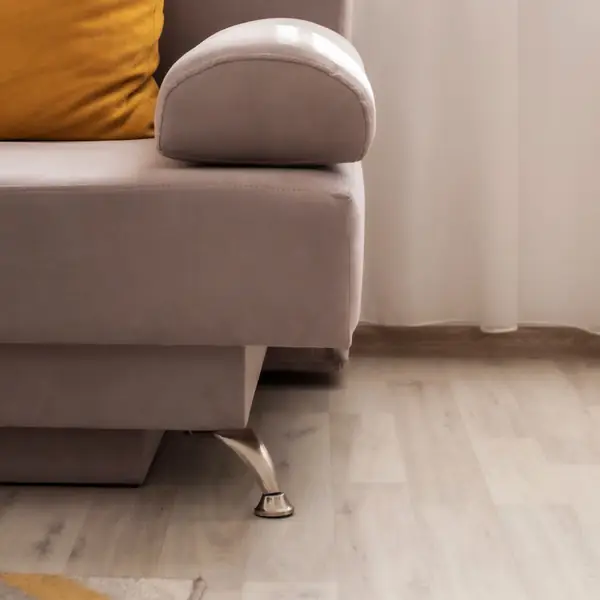
A grey sofa with a metal leg resting on a light wood floor beside a sheer curtain

Furniture Glides 101: Size, Style, and Safe Gliding

How to Pick Glides That Fit, and Keep Your Floors Looking Good

Ever dragged a chair across a hardwood floor and winced at the sound? Glides are small, inexpensive, and easy to overlook, but they do a big job: protecting your floors and making furniture easier to move.

Step One: Get the Size Right

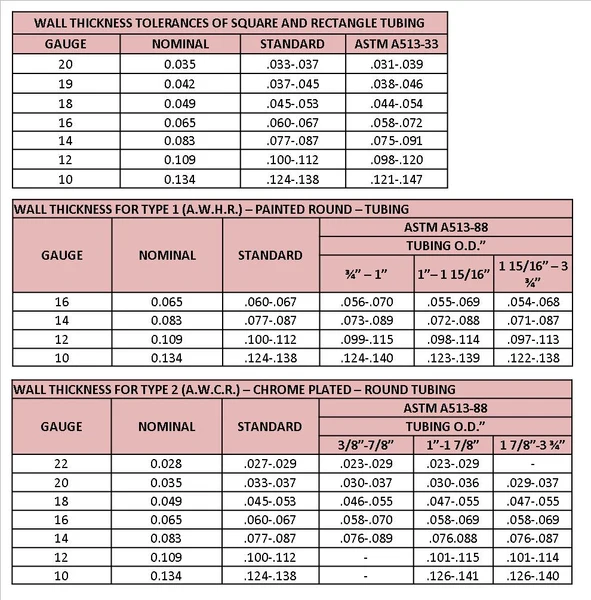
Glide size is determined by the outside dimension of the tube or leg. If you’re looking at inside-fitting glides, you’ll also need to pick according to the gauge (wall thickness) of the tube. Measure first and buy second, and you’ll avoid a lot of returns.

Tables of wall thickness by gauge for square and rectangle tubing, painted round tubing, and chrome plated round tubing
Wall thickness by gauge for square and rectangular, painted round, and chrome plated round tubing. Match your tube’s gauge to choose an inside-fitting glide.

A loose glide is as bad as no glide at all. If it slips off or shifts, the floor is unprotected, so make sure each one fits snugly.

Step Two: Match the Material to Your Floor

Different materials suit different jobs:

  • Felt — soft and dense, the usual choice for chairs, tables, and sofas on hardwood. It needs to be kept clean and replaced periodically.
  • Rubber — non-marking and grippy, a good fit for heavier or metal furniture. It also helps stop things from sliding.
  • Hard plastic — slides easily, which suits furniture that moves between carpet and hard floors. On hardwood, a thick felt glide is usually the gentler pick.
  • Metal — durable and best kept for carpet or heavy-duty use, not finished wood.

Step Three: Pick Your Style

Casterland carries a wide range of glide types, including chair leg glides, wooden furniture legs, furniture caps, furniture levelers, tack glides, round swivel glides, inserts (swivel inserts, threaded square inserts, and threaded round inserts), hand grips, and wire tips.

You can also narrow things down by material and colour:

Shop byOptions
Glide materialAcetate polyethylene, heavy duty polyethylene, metal, nylon, plastic, plastic/metal, polyethylene, and vinyl
Glide colourBlack, brass, chrome, die cast, grey, metal, steel, tan, and white

Not sure which glide fits your furniture? Ask a Casterland specialist and they’ll help you match it.

Tips for “Safe Gliding”

Plastic caps and inserts on the bottoms of chairs are considered excellent floor protection with proper care. The key words are “proper care”:

  • Clean your glides regularly. They pick up dirt particles, and those particles can scratch your floor.
  • Keep an eye on felt protectors. These sticker-like glides can be applied to the bottom of chair legs or other furniture, and they need to be cleaned or replaced as needed.
  • Replace any glide that is showing wear. A good habit is to check them every six to twelve months, and straight away if one looks compressed, dirty, or has come loose. Busy rooms and frequently moved furniture may need it sooner.
  • Prep before you stick. For self-adhesive glides, wipe the leg clean and let it dry first so the glide stays put.
  • Spread the weight. Wider glides share a heavy load over more floor, which helps prevent dents.

Ready to Find Yours?

Measure the outside dimension of the leg or tube (and the gauge, for inside-fitting glides), pick a material that suits your floor, choose a style, and keep them clean. That’s it. If you’d like help matching a glide to your furniture, Casterland and its sister brand, Caster Town, are happy to help. Shop glides by type, material, and colour at casterland.com/collections/glides, or reach out to the team directly.
A shelving wall displaying rows of alloy wheels in different designs and finishes, including silver, gold, and black

Hard or Soft? How to Choose the Right Caster Wheel

A No-Jargon Guide to Wheel Materials

Pushing a cart with the wrong wheels is one of those things you notice every single day. It’s too hard to roll, too loud on the floor, or too soft to carry the load. The good news is that choosing the right wheel comes down to a few simple questions.

Hard or Soft? Start Here

Every wheel is a trade-off between two things: protecting what’s underneath it, and how easily it rolls. Softer treads cushion shock and are gentle on floors, but on a smooth floor they take more effort to push. Harder wheels roll easily and carry more weight, but they’re louder and less forgiving on the floor. Some materials can also flatten over time under a heavy, stationary load.

The right balance depends on your floor, your load, and how often the equipment moves, so it’s worth thinking it through before you buy.

The Common Wheel Materials

Here’s a quick tour of what you’ll see most often, from the softer end to the harder end:

  • Rubber — solid rubber on a cast steel centre, or a pneumatic (air) tire on a steel rim. Handles shock and rough surfaces well, runs quietly, and is easy on floors. The trade-off is more rolling effort and a lower load rating than harder materials.
  • Neoprene — a black, rubber-type material that’s non-marking and quiet.
  • Urethane — on a plastic, nylon, or cast centre core. Quiet, non-marking, and tough against abrasion, which makes it a good-value all-rounder for warehouses, offices, and institutions.
  • Elastomer — hard, with no heat build-up. Good for tow-line applications.
  • Plastic — mostly smaller twin wheels, good for light-weight applications.
  • Nylon — mostly used in the food industry. Cast nylon is a good higher-capacity wheel. Like most hard wheels, it is noisy and can mark finished floors.
  • Phenolic — hard, and good value for money at high weight capacities. Rolls easily and tolerates heat, but it doesn’t absorb impact.
  • Steel — the highest weight capacity. A good fit where floor protection isn’t a factor, and not one to put on a finished floor.

Need to handle heat? Casterland also carries high-temperature options in hi-temp phenolic and hi-temp epoxy resin.

Quick rule of thumb: if protecting the floor matters, look at the quieter, non-marking materials like neoprene and urethane. If you need to carry the most weight and the floor isn’t a concern, look at steel. Most of the other materials sit somewhere in between.

Not sure which material suits your application? Ask a Casterland specialist and they’ll point you to the right one.

Durometer: What That Number Means

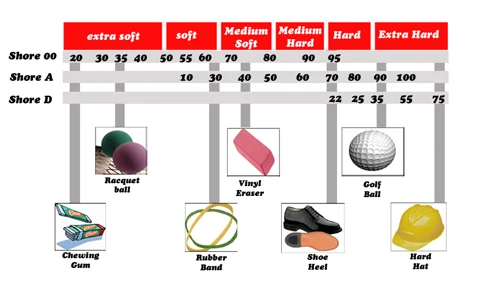
Durometer is a measure of how hard a wheel material is. More precisely, it’s the material’s resistance to permanent indentation. It’s marked in the product specifications for each item, and it’s most useful for rubber and urethane treads, where it’s usually given on the Shore A scale. A lower number means a softer tread: around 75A is soft and absorbs shock, while 95A and up is hard and rolls with much less effort.

Shore 00, Shore A and Shore D durometer scales from extra soft to extra hard, compared with everyday objects such as chewing gum, a rubber band, a shoe heel and a hard hat
The durometer scales (Shore 00, Shore A, and Shore D) compared with everyday objects, from chewing gum at the soft end to a hard hat at the hard end.

If you’re not sure whether a material is suitable for your application, give one of our experts a call.

Don’t Skip the Bore and Bearing Size

Check what bore and bearing size you need. If the standard one shown on the listing isn’t right for you, let the team know and they’ll swap it out for the correct size.

Wheel Sizes and Weight Classes at a Glance

Shop byOptions
Wheel diameter2″, 3″, 4″, 5″, 6″, 8″, 10″, 12″, 14″, 16″, and 125mm
Light weight wheelsUp to 150 lbs
Medium weight wheels150 lbs to 1,000 lbs
Heavy weight wheelsOver 1,000 lbs
High capacity wheelsOver 3,500 lbs

Bigger wheels also roll more easily over bumps and gaps, so if a cart feels like a chore to push, going up a diameter can help as much as changing the material.

Ready to Find Yours?

You now know the main materials, what durometer tells you, and what to check on the bore. Think about what the wheel needs to carry, what floor it rolls on, and how hard or soft it should be, and you’re most of the way there. If you want a second opinion, Casterland and its sister brand, Caster Town, can match the right wheel to your job. Shop caster wheels by material, diameter, and weight capacity at Casterland, or reach out to the team directly.
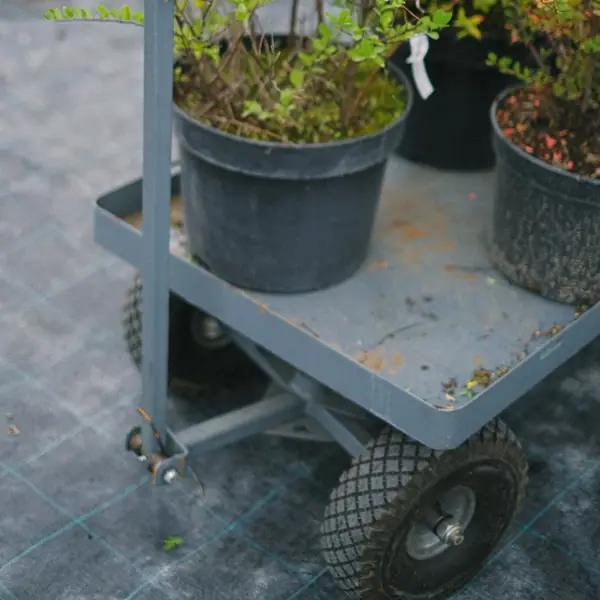
A steel hand cart with pneumatic wheels carrying potted shrubs across a nursery yard

Wheels for Hand Trucks, Carts, and Dollies: What to Look For

A Practical Guide to Choosing Wheels for Material Handling Equipment

A hand truck, service cart, or moving dolly is only as good as the wheels under it. Pick the wrong ones and even the best equipment is a chore to use.

Start With Two Questions

When choosing the correct wheel or caster, the best way to decide is to ask: “How is it going to be used?” and “How often?”

If the device is used outdoors in uneven situations, the cushioned ride of air or flat-free wheels works best. You should also know that non-marking tires are available. If the equipment is used infrequently, a solid option is likely the best way to go.

The Four Wheel Types You’ll Choose Between

Wheel typeBest forGood to know
Pneumatic (air-filled)Rough, uneven, or outdoor surfacesRolls easily over bumps. Needs to be kept inflated.
Flat-freeIrregular or soft surfaces, and outdoor useA wide tread spreads the load, and it never goes flat.
Solid rubberRough or outdoor use where you want no upkeepRugged and maintenance free. Stable under heavy loads.
PolyurethaneTypical factory, warehouse, and institutional floorsQuiet and non-marking, with good chemical resistance.

Not sure which wheel fits your equipment? Ask a Casterland specialist and they’ll help you match it.

Steel or Aluminum?

For the material the equipment itself is made from (steel, aluminum, or plastic), here’s how they compare:

  • Aluminum is more ergonomic when it comes to lifting the unit, and it also protects against corrosion.
  • Plastic and aluminum are often preferred in a food environment.
  • Steel is more likely to be the economical choice, and it is more likely to be made in Canada.

Don’t Overlook the Add-Ons

Many times people don’t realize that there can be helpers in the form of add-ons and different configurations. Ergonomics is a commonly used word these days, and things like handle positioning or the correct heights for individual users can often be arranged. Suggestions can also be made for specific circumstances that call for something the makers don’t offer.

What Casterland Carries

Casterland’s material handling range includes hand trucks, service carts and moving dollies, high capacity rollers, and specialty equipment and accessories. You can shop by wheel type (5″ casters, 6″ solid rubber, 8″ pneumatic, 8″ solid rubber, 10″ flat free, 10″ pneumatic, and 10″ solid rubber) or by weight capacity:

Weight classCapacity
Medium weight150 lbs to 1,500 lbs
Heavy weightOver 1,500 lbs
High capacityOver 4,000 lbs

Ready to Find Yours?

Casterland specializes in mobility from the ground up. That means the team knows the best wheel or caster for a particular piece of equipment and can match the two together, since Casterland supplies many of the North American manufacturers of material handling products and sources from makers around the world. They’ve been doing this since 1975, and chances are they’ve seen your scenario before. Casterland’s sister brand, Caster Town, is happy to help too. Shop hand trucks, carts, dollies, and rollers at Casterland, or reach out to the team directly.
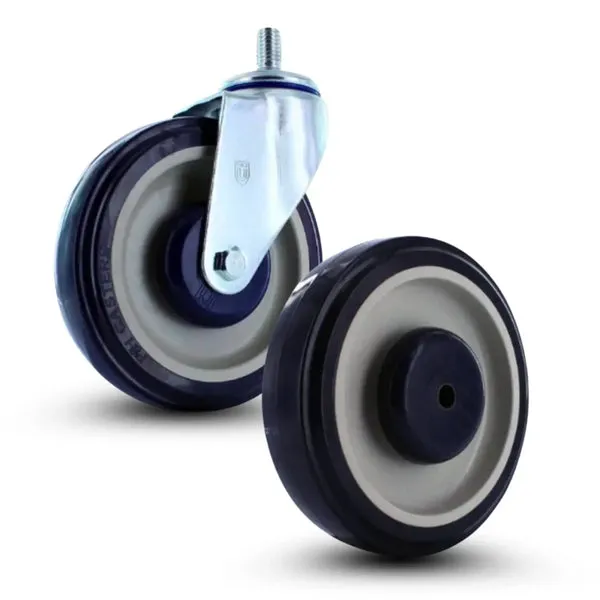
A swivel stem caster with a blue polyurethane tread and grey hub, beside a matching loose wheel

What is a Caster?

A No-Jargon Guide to Buying the Right Wheels

Ever pushed a heavy cart, a hospital bed, or a squeaky office chair across a floor and thought, “there has to be a better wheel for this”? You’re closer to an expert than you think, but you just need the right words for what you’re looking at.

That’s what this guide is for: no assumed knowledge, just what you actually need to know before you buy.

So What Is a Caster, Exactly?

Here’s the one thing to “lock in” first: a caster isn’t just a wheel. It’s the whole assembly; the wheel plus the bracket that attaches it to whatever needs to roll. A wheel on its own is just the round part touching the ground. A caster is the ready-to-install unit: wheel, bearing, and mounting hardware together, built to bolt, screw, or weld onto a cart, a chair, a machine, or anything else you need moving without lifting it.

You’ve seen casters everywhere, even if you never had a name for them: office chairs, hospital beds, restaurant equipment, tool chests, dollies, warehouse shelving, factory machinery. If something heavy needs to move without being carried, there’s a good chance a caster’s doing the work. (You can see the full range of options in Casterland’s catalog if you want to look while you read.)

Swivel or Rigid? That’s Your First Decision

Casters come in two basic styles, and picking the right one comes down to how you need to move.

Swivel casters rotate a full 360-degrees, so you can steer and turn in tight spots. Rigid casters only roll straight, front to back – no turning. Most carts use both: two rigid casters at one end for stability, two swivel casters at the other for steering. That’s the same setup as a shopping cart, so you already know how it feels.

Need to maneuver around corners? Go swivel. Need something that just tracks straight and stays predictable? Rigid’s your answer.

Many swivel casters also come with a swivel lock (holds the wheel facing straight ahead when you need it) and a wheel brake (stops it from turning entirely). Worth adding anywhere safety matters — medical equipment, workbenches, anything on a slope.

Plate Mount or Stem Mount? Check What You Already Have

The mount matters as much as the wheel. A plate mount attaches with a flat metal plate and several screw holes — the standard for carts and larger equipment, since it spreads the load out. A stem mount attaches through a single center post that fits into a socket, common on lighter furniture like office chairs.

Before you buy anything, check what your equipment currently uses. Plate and stem casters aren’t interchangeable without modifying the mount point, and that’s an easy mistake to make.

The Wheel Material Changes Everything

This is where most first-time buyers get stuck, so let’s make it simple. The material affects how much weight the wheel carries, how loud it is, whether it marks your floor, and how it holds up indoors versus out.

  • Polyurethane — quiet, floor-friendly, handles moderate to heavy loads. The default choice for offices, retail, and light industrial use.
  • Rubber — soft, quiet, good grip. Carries less weight than harder materials and wears faster under heavy industrial use.
  • Cast iron — built for serious weight and heat. Hard and loud, and it will damage softer flooring. Warehouse material, not showroom material.
  • Nylon — hard, affordable, good for heavy loads in dry spaces. Like cast iron, it’s noisy and rough on finished floors.
  • Stainless steel — this one’s about the frame, not the tread. It resists corrosion, which is why you’ll see it in food processing and healthcare, anywhere that gets washed down often.

Quick rule of thumb: softer and quieter wheels protect your floor but carry less weight. Harder wheels carry more weight but bring more noise and more floor wear.

Don’t Skip the Load Capacity Math (The Whole Caster Set Matters)

Every caster has a rated load capacity — the max weight it can safely carry — and that number is per caster, not per set. Outfitting a cart with four casters? The combined rating of all four should comfortably clear the total weight of the cart plus whatever you’re loading onto it, with some room to spare.

Guessing here is the single most avoidable mistake people make. Give yourself the extra five minutes with a calculator before you order. Casterland’s team can also help you work out the right rating if you’re not sure.

A Few More Things That Actually Matter

Bigger wheels roll more smoothly over bumps and uneven flooring, and take less effort to get moving. Better bearings — precision or roller bearings instead of basic plain bearings — mean smoother spinning and longer life under heavy use. And if the caster’s headed outdoors or somewhere wet, look for wheels rated for that specifically. Plenty of materials that work great indoors will crack, flatten, or corrode outside.

Ready to Find Yours?

You now know more about casters than most people who buy them. To recap: think about where it’ll be used, what it needs to carry, whether it needs to steer or roll straight, and what floor it’s rolling on. Those four answers get you to the right material, mount, and size faster than anything else.

If you’d rather skip the guesswork, that’s exactly what Casterland is here for. As a specialist in casters and wheels for everyday and heavy-duty use, Casterland — and its sister brand, Caster Town — can match the right wheel to your job, whether that’s one replacement caster for a chair or a full set for warehouse equipment. Browse the full catalog of swivel, rigid, plate mount, and stem mount casters at casterland.com/collections/casters, or reach out to the team directly and they’ll help you find the right fit.